Ordinary people can also test the quality of plastic bags at home or in daily life through some simple methods. Although these tests cannot completely replace professional testing in the laborator, they can help identify the basic quality and durability of plastic bags. Here are some common testing methods:
1. Touch test
Method: Touch the plastic bag with your hands to feel its thickness and softness. Generally, high-quality plastic bags are softer to the touch and have uniform thickness, while low-quality plastic bags may feel thin or wrinkle easily.
Evaluation: If the plastic bag feels very thin and fragile, it may be of poor quality. If it feels thick and flexible, it is usually of good quality.
2. Tensile test
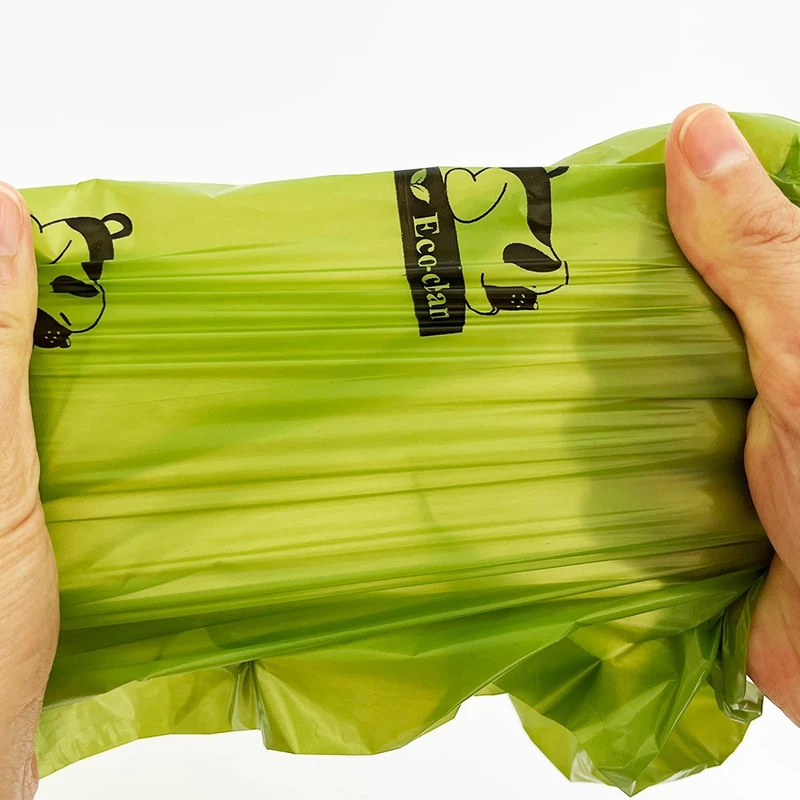
Method: Pull both sides of the plastic bag with both hands to test its tensile strength. A good plastic bag should have a certain toughness and elasticity, and be able to withstand a certain tensile force without breaking easily.
Evaluation: If the plastic bag breaks or cracks under a slight pull, it may be a low-quality material. If the bag has good stretchability and will not deform or break until it is under a greater tensile force, it is of good quality.
3. Load-bearing test
Method: Put some items into the plastic bag (such as books, cans, etc.), gradually increase the weight, and observe whether the plastic bag can bear it. The load-bearing test can simulate the bag's bearing capacity in daily use.
Evaluation: High-quality plastic bags can bear a large weight without being easily torn or damaged. Poor-quality plastic bags may break or deform when bearing less weight.
4. Waterproof test
Method: Pour some water into the plastic bag and observe whether there is leakage or water dripping through the bag material.
Evaluation: High-quality plastic bags should have good waterproofness and should not have any leakage. If there is leakage, it means that the material may be defective or of poor quality.
5. Light transmittance test
Method: Hold the plastic bag in front of a light source and observe how much light passes through the bag. High-density plastic bags are usually less transparent than low-density plastic bags.
Evaluation: If the bag looks very transparent and thin, it may be of low quality. If the light transmittance is low and the material looks thick, it is usually of good quality.
6. Tear test
Method: Tear a small hole in one corner of the plastic bag by hand, and then try to tear the bag along the tear.
Evaluation: High-quality plastic bags will have a certain resistance when torn and will not tear along the tear. Low-quality plastic bags may tear very easily and the tear will expand quickly.
7. Odor test
Method: Sniff the plastic bag with your nose to check if there is a noticeable plastic smell or pungent odor.
Evaluation: High-quality plastic bags generally have little or no odor. Pungent odors may indicate that the bag uses low-quality materials or harmful chemicals.
8. Heat resistance test
Method: Expose the plastic bag to hot water or place it near a hot object (avoid fire) to observe whether it shrinks or deforms.
Evaluation: High-quality plastic bags should maintain their shape when exposed to heat, while low-quality bags may shrink or deform.
9. Buoyancy test
Method: Place the plastic bag in water to see if it sinks or floats on the water.
Evaluation: This is a simple way to test the density of a plastic bag. Most plastic bags will float. If the bag sinks quickly, it may indicate that the material is denser or mixed with other substances.
Through these simple methods, ordinary people can make a preliminary judgment on the quality of plastic bags in daily life.