

Stretch Film
Your Professional Stretch Film Supplier
Was established in 2009 and has been in operation for 17 years. The company is deeply involved in the field of plastic film and packaging bag manufacturing, focusing on the production of a series of high-quality plastic packaging products. Such as PE, PP, PA, CPP, POF, PVC, EVA, PLA, recycled materials and other materials. There are various styles, including ziplock bags, shopping bags, garbage bags, slider Bags, mailing bags, fresh-keeping bags, ice bags, bread bags, vacuum bags, stand-up bags, paper bags, biodegradable Bags, roll Bags, shrink films, etc. These products are widely used in food, transportation, daily necessities, electronics, industry, medical, agriculture and other industries.


Why choose us
Customizable products
The company provides professional plastic packaging bag customization services to meet your various needs. Whether it is size, thickness, color or printing pattern, we can tailor it according to your requirements.
OEM and ODM services
The company provides OEM (original equipment manufacturing) and ODM (original design manufacturing) services to meet the diverse needs of different customers and provide high-quality packaging solutions.
Certificates
All products are produced in strict compliance with quality management system and environmental management system standards. ISO14001, ISO9001, SGS-REACH, SGC-GRC02105
Recyclable material production
We are committed to providing high-quality and environmentally friendly plastic packaging solutions to help you reduce costs and environmental impact. Many of the products we produce contain at least 30% recycled content, avoiding the additional cost pressure caused by the increase in taxes on imported plastic packaging.
Stretch Film
Stretch Wrap- A highly stretchable plastic film commonly made from Linear low-density polyethylene (LLDPE) wrapped around items. The elastic recovery keeps the products tightly bound.
Stretch film wraps products on pallets and secures them to each other and the pallet. Helping to reduce product loss, discourage load tampering, and reduce worker injury.
|
Material |
LDPE, raw material or recycled material |
|
Size |
Customizable size and thickness |
|
Color |
Transparent/customized 12 colors |
|
Printing |
Gravure printing |
|
Trademark |
Customizable LOGO |
|
Product Certification |
ISO9001, ISO14001, SGS test reports, FDAapproved material |
|
Design |
Can be designed according to needs or AI manuscripts |
|
Application |
Food, industry, daily necessities, brand packaging, shopping |
|
Sample Time |
3-7 days |
|
Origin |
Xiamen, China |
|
Custom Order |
Accepted |
|
OEM and ODM services |
Accepted |
|
MOQ |
Depends on the specifications, 100kgs-1000kgs |
|
Supply Quantity |
50 cabinets/month |
|
Delivery Time |
About 35 days after receiving the advance payment and confirming all the details |
|
Packaging Method |
Boxed, Bagged, Rolled, Custom Packaging |
|
Price |
Depends on the size, thickness, packaging and printing |
|
Shipping |
Ship by sea, air, express, train or customized |
Advantages of Using Stretch Film
The use of stretch wrapping film offers numerous advantages:
Cost Reduction
Using stretch film is more economical compared to other packaging methods.
Increased Packaging Speed
Particularly with machine wrapping, the process becomes significantly faster.
High Protection
Stretch film safeguards products against moisture, dust, and damage.
Lightweight and Transparent
These features allow easy product identification without unwrapping.
Types of Stretch Film


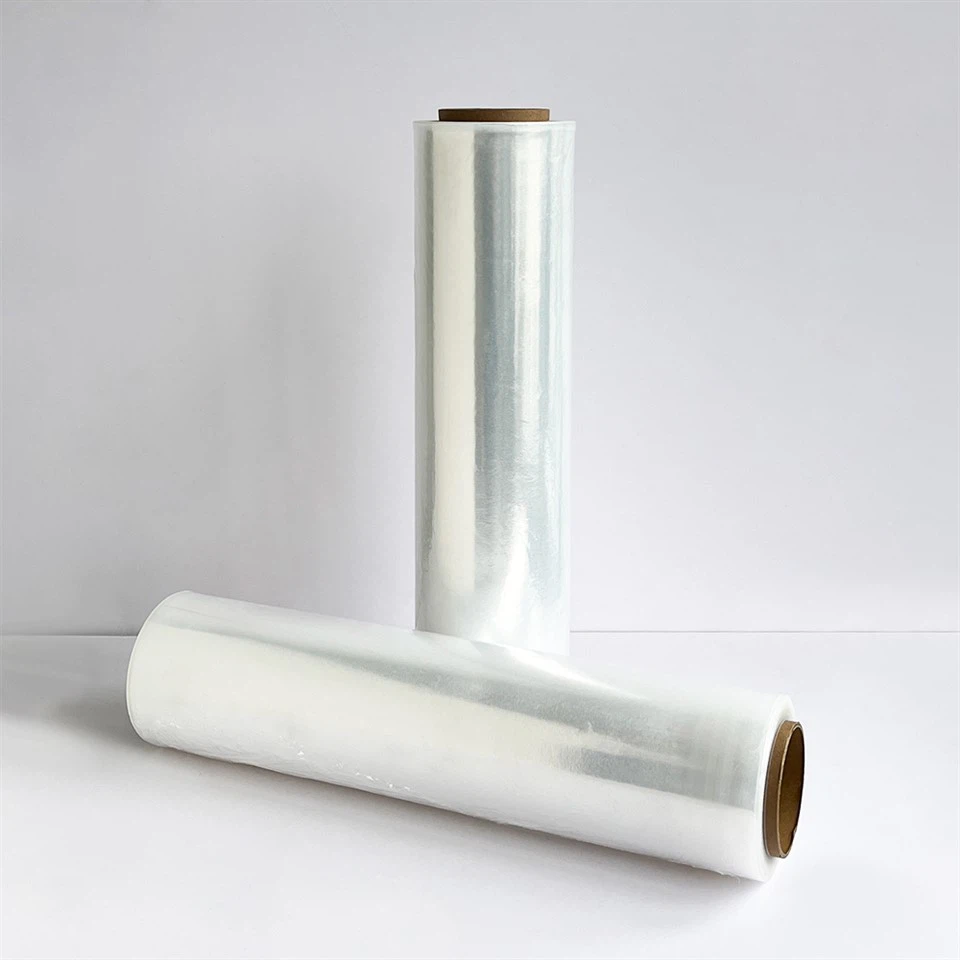
Stretch film is essential for palletized products in transport. It keeps products safe, secure, and dry. It also reduces workplace injuries caused by shifting heavy objects and discourages product tampering. There are many different types of stretch wrap that are designed to fit your operation’s specific needs. Below is a break down of ten types of stretch film that are commonly used:
Blown Stretch Film: Blown stretch film has a strong cling and is more puncture resistant than cast films. It is made using the blown extrusion process where the wrap is fed through a cylindrical tube and then blown up like a balloon. Blown film has a high load and stretch capacity but poor clarity compared to cast stretch film. It is ideal for wrapping A, B, and C load profiles as it is versatile and sturdy.
Cast Stretch Film: Cast stretch film has a high level of clarity making pallets easy to identify and scan for end users. Cast film stretches easily to fit over packages and may utilize double-sided cling for further protection during transportation. While cast stretch wrap is easy to stretch and clings well, it is not as strong as blown stretch wrap and is more susceptible to tearing but is typically less expensive than blown stretch wrap.
Pre-Stretch Film: As the name suggests, pre-stretch film is stretched to capacity before being wrapped onto a stretch film roll. This stretch film uses less material and can be very cost effective.
Hand Stretch Film: This type of film is created for the sole purpose of hand wrapping. This is great for businesses who wrap a small amount of pallets daily (usually 50 pallets or less).
Color Stretch Film: Color stretch films were created for easy organization and color coding in warehouses. The specialty stretch film comes in a variety of colors.
Opaque Stretch Film: Opaque stretch film is not see-through and offers additional security by concealing the contents of the pallet. This film may also have an additive that protects from UV rays and keeps products safe from the elements.
VCI Stretch Film: Volatile Corrosion Inhibitor stretch film (VCI) protects products from corrosive substances like rust because it keeps moisture and other harmful elements out. This is ideal for metal pipes or other metal products.
UVI Stretch Film: Ultraviolet Inhibitor stretch film (UVI) protects against harmful UV rays. This is ideal for pallets stored outside and in direct sunlight. UVI stretch film is designed to withstand UV rays so it will not lose any of its strength or cling power outside over a predetermined (6 months, 1 year, 2 years, etc.) amount of time.
Vented Pallet Wrap Stretch Film: This is a film with die cut holes for ventilation. The ventilation allows condensation to leave the pallets, reduces spoilage, is more flexible, and will not obstruct forklift wheels.
No Cling Stretch Wrap: As the name implies, this stretch film is not clingy. Ideal for products like carpeting so that the products can be moved easily without sticking to each other.
Applications of Stretch Film
The applications of stretch film are extensive, making it an essential packaging and protective tool in many industries. Below are some of the key applications:
Product Protection
Stretch film acts as a protective layer, shielding products from dust, moisture, and physical damage.
01
Food Packaging
Food-grade stretch film helps maintain the freshness of food items and prevents contamination.
02
Pallet Wrapping
In warehouses and logistics, pallet stretch film helps stabilize products on pallets.
03
Pharmaceutical and Healthcare Industries
In the pharmaceutical industry and for medical equipment, industrial stretch film is used for safe packaging of products.
04
Stretch film manufacturing
There are two completely different production processes when it comes to manufacturing stretch film, bespoke to both Cast and Blown film. There are several features that both films share,however the production process plays a key part in making the films fit for different purposes.
Processes are as follows:
Resin preparation: Stretch film is made up of a unique blend of polymers, including various different additives such as pigments, UV resistance, and tackifiers. The LLDPE resin is mixed with these additives, such as colorants and stabilizers, to achieve the desired properties of the film. Once the correct polymers have been loaded, the film extrusion process begins.
Extrusion: Firstly, the resin mix heated and melted until it is molten and has reached the correct viscosity. What happens next is what makes Cast and Blown film different. The molten material is forced through a flat die to begin the cooling and shaping process.
Cast film is cooled by passing the flat sheet through a series of large rollers, which cool and solidify the material. This process is known as casting because the resin in cast onto the chilled roller which gibes the film a smooth, transparent surface.
Blown film is a very different extrusion process to cast. The molten material is cooled by inflating the resin into a very large bubble, several meters tall. This causes it to expand and become thinner as it cools. The size and thickness of the bubble is carefully monitored and controlled to ensure the film has the desired properties before it is fed into the machine to be stretched.
Winding: The stretched film is then wound onto large rolls, called mother rolls, ready for the slitting process to begin.
Slitting: The large rolls of film are then slit into smaller rolls of various widths, depending on the desired product specification. These are packaged and shipped to the customer.
During the production process, various factors such as the resin formulation, stretching conditions, and cooling rates will affect the properties of the film, such as its puncture resistance, opacity, and cling. Therefore, manufacturers carefully control these variables to produce stretch film with consistent quality and performance.

Stretch film is essential for product transportation and storage. There are many different types of stretch film to choose from and many different application methods. When you are choosing the type of stretch film to use for your packaging, take into consideration your load’s profile. Below are the three load profiles:
The A load profile includes no protruding objects, forms a basic square shape, and is very stable. With clean edges this type of load is the easiest to wrap. This load profile does not require a super thick gauge.
The B load profile has protruding objects of 2 inches or less and is semi-stable. Because this load has protruding objects, a sturdy and thicker gauge is needed to secure your products. Choose an option with a high tear and puncture resistance to ensure sharp corners do not puncture the stretch wrap.
The C load profile has protruding objects of 2 inches or more and is unstable to semi-unstable. Given the unstable properties of this load profile, a gauge is needed to protect from tears or punctures. This load profile is the most hazardous as there are many unusual shapes and corners that protrude. A high performance film is needed for this type of load.
Storage Suggestion
- Avoid sunlight and rain, pls store them in the warehouse when not in use.
- When storing plastic stretch film, it should be placed in a roll and not folded;
- If plastic stretch film is not used for a long time, it should be turned once every quarter;
- It is forbidden to contact with acid, alkali and organic solvents and keep the stretch film clean and dry
Our Certifications


We're well-known as one of the leading stretch film manufacturers and suppliers in China. Please feel free to wholesale high quality stretch film from our factory. For customized service, contact us now.
Packing Stretch Film Roll, stretch film