

Product Overview
Plastic clothes cover bags are widely used to protect garments from dust, dirt, moisture, and handling during storage, transportation, and retail display. They are commonly used by clothing manufacturers, dry cleaners, garment exporters, fashion retailers, and wholesale distributors.
However, not all plastic clothes cover bags offer the same performance. Different materials provide different levels of flexibility, transparency, stiffness, tear resistance, and cost efficiency. Common options include LDPE, HDPE, PP, OPP, CPE, EVA, and selected compostable materials.
Understanding these differences helps buyers select suitable garment packaging for their products, storage conditions, and budget. Whether you need lightweight garment covers for bulk shipping or premium clothing bags for retail presentation, choosing the right material is an important part of packaging planning.
What Are Plastic Clothes Cover Bags?
Plastic clothes cover bags are protective packaging products designed to cover individual garments or groups of garments. They can be manufactured in different sizes, thicknesses, shapes, and opening styles to accommodate shirts, dresses, suits, coats, uniforms, and other clothing items.
Common styles include flat garment bags, hanger-hole covers, dry-cleaning bags, zipper garment bags, and bags supplied on perforated rolls. Depending on the intended use, they may be transparent, translucent, colored, or custom printed.
For commercial buyers, the ideal plastic clothes cover bag should provide appropriate garment protection while meeting packaging efficiency, appearance, and purchasing cost requirements.
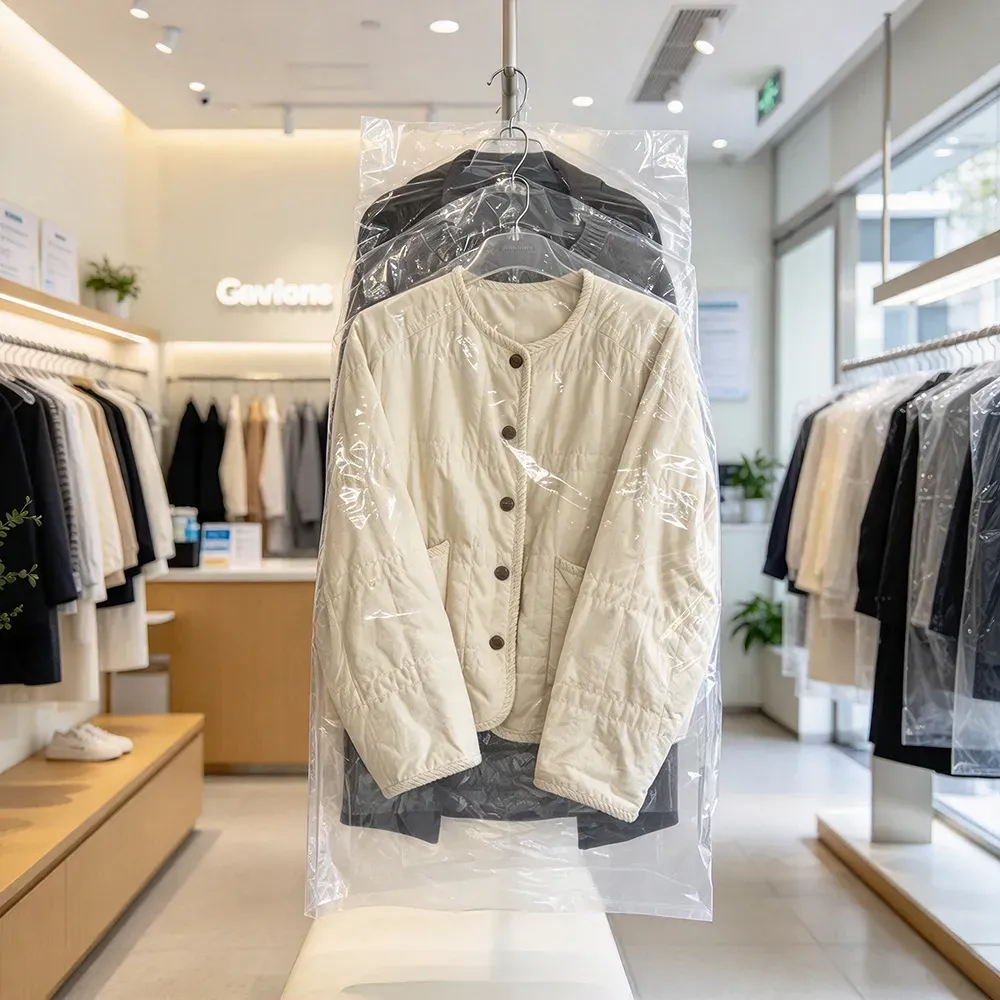
Common Materials Used for Plastic Clothes Cover Bags
1. LDPE Garment Bags
Low-density polyethylene (LDPE) is a widely used material for flexible plastic packaging. Its softness and flexibility make it a practical choice for many garment protection applications.
Key Features:
Soft and flexible
Good toughness under normal handling conditions
Available in clear, translucent, and colored options
Good moisture resistance
Suitable for various bag sizes and thicknesses
Applications:
LDPE garment bags are commonly used for dry-cleaning covers, shirts, suits, dresses, uniforms, and finished garments awaiting shipment.
Advantages:
LDPE clothes cover bags are easy to handle and can accommodate garments of different shapes. They can be customized with hanger holes, shoulder-shaped openings, printing, and different bag dimensions.
For clothing manufacturers and garment exporters, LDPE is a practical option for bulk packaging because it offers a useful balance of flexibility, protection, and cost.
2. HDPE Clothes Cover Bags
High-density polyethylene (HDPE) is another common polyethylene material. Compared with LDPE, HDPE films are often stiffer and can feel thinner and crisper at similar packaging specifications.
Key Features:
Relatively high stiffness
Lightweight construction
Good moisture resistance
Suitable for thin-film applications
Available in different sizes and thicknesses
Applications:
HDPE may be used for lightweight garment covers and basic protective packaging where a relatively crisp film is acceptable.
Advantages:
HDPE can provide useful stiffness for certain lightweight bags. However, its softness and drape are generally different from those of LDPE. Actual strength and puncture resistance depend on the film grade, thickness, and manufacturing process.
Buyers should compare samples before choosing HDPE for garments with sharp accessories or packaging applications involving repeated handling.
3. PP Garment Bags
Polypropylene (PP) is used in various flexible packaging applications. Its properties depend on whether the product uses cast polypropylene, oriented polypropylene, or another PP film structure.
Key Features:
Can provide good transparency
Often offers relatively good stiffness
Available in different film structures
Suitable for selected garment packaging applications
Can support custom printing with the appropriate surface treatment
Applications:
PP-based packaging may be used for selected clothing packaging bags, folded garments, and retail packaging products.
Advantages:
PP can be considered when buyers want a relatively crisp appearance and good product visibility. However, the specific film grade must be selected according to the required flexibility, sealing method, and handling conditions.
PP is a broad material category, so buyers should request the exact film specification rather than comparing all PP products as if they had identical properties.
4. OPP Clothing Bags
Oriented polypropylene (OPP) is known for its high clarity, glossy appearance, and relatively stiff feel. It is often selected for packaging applications where product presentation matters.
Key Features:
High transparency
Glossy surface
Good visual presentation
Suitable for printed packaging
Less flexible than many comparable PE films
Applications:
OPP clothing bags are suitable for packaging folded T-shirts, shirts, accessories, and selected retail garments.
Advantages:
The clear, glossy film allows customers to see the garment without opening the package. Custom printing can also display a brand logo, product information, or other visual elements.
However, standard OPP film may be more prone to cracking or splitting under certain folding and stress conditions than flexible PE film. Heat-sealing performance also depends on the film grade and bag construction.
5. CPE and EVA Garment Bags
CPE and EVA are used in selected soft or specialty plastic packaging applications. They are not identical materials, and their properties depend on the specific formulation and structure.
CPE, or chlorinated polyethylene, can be used to produce soft, frosted-looking packaging films. EVA, or ethylene-vinyl acetate, is used in some flexible packaging products where a softer feel is desired.
Key Features:
Can provide a soft or flexible feel
Available in transparent or frosted appearances, depending on the product
Suitable for selected zipper bags and reusable packaging
Can support customized sizes and colors
Applications:
These materials may be used for premium clothing packaging, zipper garment bags, reusable storage bags, and specialty retail packaging.
Advantages:
CPE or EVA packaging can offer a distinctive appearance and tactile feel compared with basic thin PE bags. It may be suitable for fashion brands that want packaging to contribute to the overall product presentation.
However, these materials can cost more than basic thin-film garment covers. Buyers should confirm material composition, thickness, durability, and intended reuse before placing bulk orders.
6. Compostable Garment Bags
Some garment packaging products are manufactured using compostable polymer formulations, potentially including PLA, PBAT, or other suitable components.
Key Features:
Designed for specific compostable packaging applications
Transparency and flexibility depend on the formulation
Available in selected customized formats
Requires appropriate certification for substantiated compostability claims
Applications:
Compostable garment bags may be considered by clothing brands and retailers with defined compostable packaging requirements.
Advantages:
These materials may support packaging programs with specific environmental objectives. However, buyers should carefully assess durability, storage stability, product claims, and the availability of suitable composting facilities.
Compostable does not automatically mean suitable for home composting or rapid degradation in ordinary outdoor conditions. Certification and disposal instructions should match the finished product.
Comparison of Different Plastic Clothes Cover Bag Materials
| Material | Main Characteristics | Common Applications | Key Considerations |
|---|---|---|---|
| LDPE | Soft, flexible, and tough | Dry-cleaning covers, suits, dresses | Practical for general garment protection |
| HDPE | Relatively stiff and lightweight | Basic lightweight garment covers | Check flexibility and handling requirements |
| PP | Properties vary by film structure | Selected clothing packaging | Specify the exact PP film type |
| OPP | Clear, glossy, and relatively stiff | Folded shirts, T-shirts, retail packaging | Consider folding and splitting resistance |
| CPE / EVA | Can offer a soft or frosted appearance | Zipper bags, specialty garment packaging | Verify composition and intended reuse |
| Compostable materials | Performance depends on formulation | Selected environmental packaging programs | Confirm certifications and disposal conditions |
No single material is ideal for every garment packaging application. The right option depends on the type of clothing, packaging method, desired appearance, handling conditions, and purchasing budget.
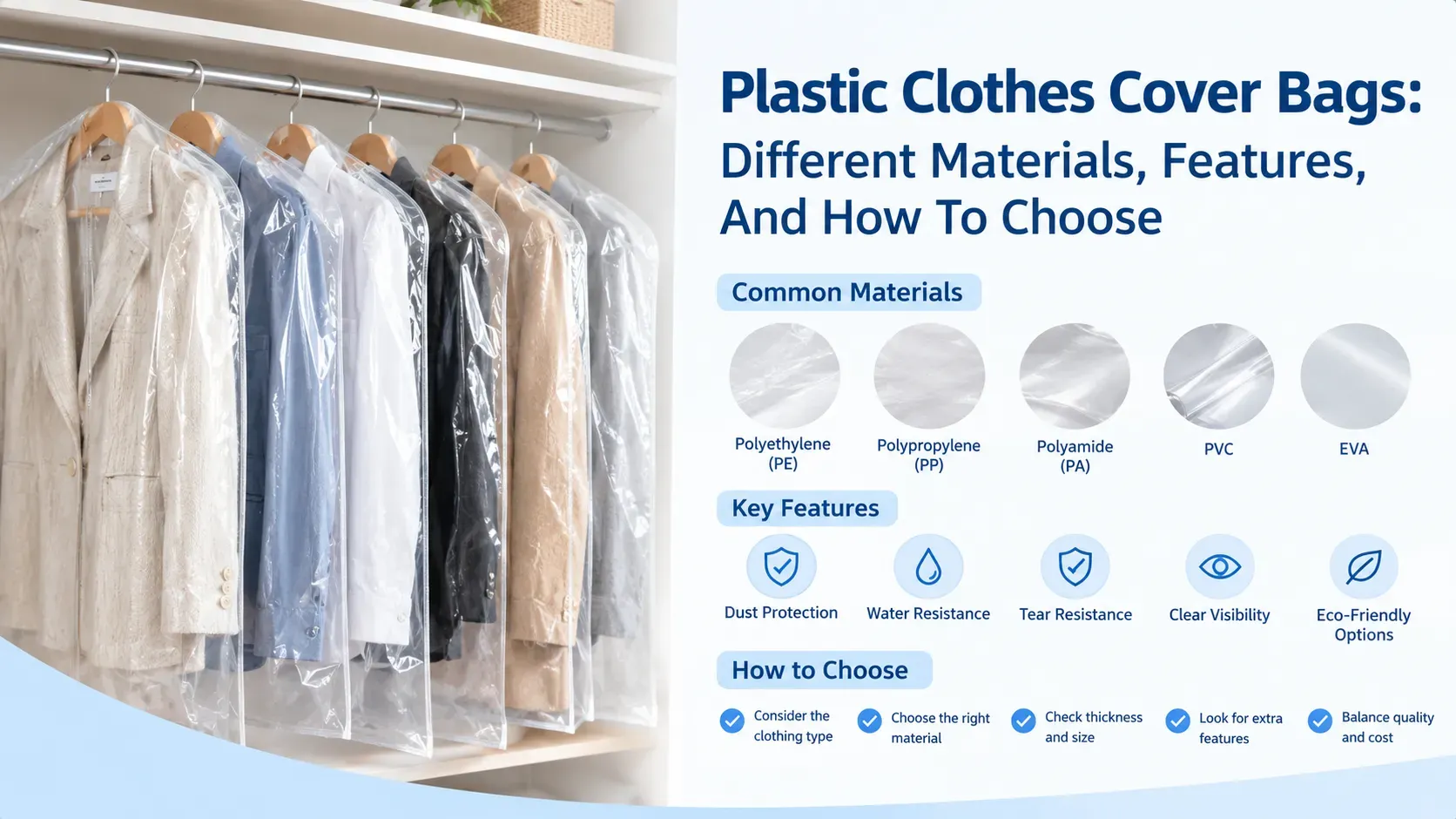
How to Choose the Right Plastic Clothes Cover Bags
1. Identify the Garment Type
Different garments require different bag dimensions and protection levels.
Shirts and T-shirts may need compact bags that fit folded clothing. Suits, dresses, and coats generally require longer covers with sufficient width and suitable hanger openings.
For delicate garments, buyers should also consider whether the bag material and design may cause snagging, static buildup, or other handling issues.
2. Evaluate Transparency and Appearance
Transparent garment bags allow clothing to be identified quickly without opening the package. LDPE can provide practical transparency for general protection, while OPP is often selected when a glossy retail appearance is important.
Frosted CPE-style bags or other specialty structures may be suitable for premium packaging programs that prioritize a distinctive appearance.
Buyers should select the appearance that matches the intended use, whether it is factory packing, warehouse storage, dry cleaning, or retail presentation.
3. Select the Appropriate Thickness
Bag thickness affects weight, handling, material consumption, and cost. Thin films may be suitable for short-term dust protection, while heavier garments or repeated handling may require a more robust construction.
Thickness should be evaluated together with material type, bag dimensions, and expected handling conditions. A thicker bag is not automatically better if its design does not fit the intended garment.
For bulk orders, request samples and test the bags under realistic packing, storage, and transportation conditions.
4. Consider the Bag Design
Plastic clothes cover bags are available in several designs, including:
Flat bags for folded garments
Hanger-hole bags for hanging clothes
Shoulder-shaped garment covers
Long covers for dresses and coats
Zipper bags for reusable storage
Perforated bags on rolls for efficient dispensing
The right design can improve packing speed and reduce unnecessary material use. Clothing manufacturers should confirm whether the bags will be filled manually or used with an automated packing process.
5. Compare Total Packaging Costs
The cost of plastic clothes cover bags depends on material, thickness, dimensions, printing, bag design, order quantity, and shipping arrangements.
LDPE and HDPE may be practical for many high-volume applications, while specialty materials and reusable zipper bags can involve higher material or conversion costs.
For commercial purchasing, compare the cost per bag alongside protection performance, packing efficiency, defect rates, and freight expenses.
6. Check Environmental and Market Requirements
Environmental requirements differ by customer, market, and product application. Buyers may need to consider recyclable designs, recycled content, compostable materials, or specific labeling requirements.
These options are not interchangeable. For example, a recyclable PE bag is not necessarily compostable, and a compostable bag may require particular processing conditions.
Before approving a material, confirm its composition, relevant documentation, and suitability for the destination market.
Custom Plastic Clothes Cover Bags for Wholesale Buyers
Custom plastic clothes cover bags can be tailored to different garment sizes, packaging processes, and brand requirements.
When requesting a quotation from a garment bag manufacturer, buyers should provide the following specifications:
Material: LDPE, HDPE, PP, OPP, CPE, EVA, or a specified compostable material
Dimensions: Width, length, and any required gusset
Thickness: Specified in microns or mil
Bag style: Flat bag, hanger-hole cover, shoulder-shaped cover, zipper bag, or roll format
Color and transparency: Clear, translucent, frosted, or custom colors
Printing: Brand logo, product information, or custom graphics
Order quantity: Estimated volume and preferred packing method
Application: Dry cleaning, factory packing, export transportation, retail packaging, or storage
A qualified supplier can review the specifications and recommend an appropriate material and bag design. For larger orders, sample approval before mass production helps reduce the risk of size, appearance, or performance mismatches.
Why Work with a Plastic Garment Bag Manufacturer?
Working directly with a plastic garment bag manufacturer can help buyers coordinate material selection, customized dimensions, printing, and production requirements.
A suitable supplier should be able to explain the differences between film materials, provide clear specifications, maintain consistent product quality, and support inspections when required.
For wholesale and export orders, buyers should also confirm production capacity, minimum order quantity, lead time, packing details, and shipping arrangements.
Clear specifications and sample testing are particularly important when the bags will be used in high-volume garment production or distribution.
Frequently Asked Questions
What is the best material for plastic clothes cover bags?
LDPE is a practical option for many general-purpose garment covers because of its softness and flexibility. HDPE may suit lightweight applications requiring a stiffer film, while OPP can be appropriate for clear, glossy retail packaging. The best choice depends on the garment and packaging requirements.
What is the difference between LDPE and HDPE garment bags?
LDPE garment bags are generally softer and more flexible. HDPE bags are often stiffer and have a crisper feel. Their actual strength, transparency, and resistance to tearing depend on the grade, thickness, and bag design.
Are OPP clothing bags suitable for heavy garments?
OPP can be suitable for selected clothing packaging, but standard OPP film is not always the best choice for heavy garments or applications involving repeated folding and stress. Buyers should evaluate film thickness, bag dimensions, and handling conditions before ordering.
Can plastic clothes cover bags be customized?
Yes. Manufacturers can often customize dimensions, thickness, colors, printing, hanger holes, openings, and packaging formats. Available options depend on the production equipment and material selected.
Are plastic garment bags suitable for long-term clothing storage?
They can provide dust protection, but ordinary plastic covers generally offer limited ventilation. Long-term storage requirements vary according to the garment, humidity, and storage environment. Buyers should avoid assuming that an airtight plastic cover is suitable for every fabric or storage condition.
What information is required for a bulk quotation?
Provide the material, bag dimensions, thickness, style, printing requirements, order quantity, intended application, and destination market. A reference sample or garment measurements can help the manufacturer recommend the correct specifications.
Conclusion
Plastic clothes cover bags are available in a range of materials, each offering different advantages for garment protection, retail presentation, and bulk packaging.
LDPE is a versatile option for everyday garment covers. HDPE can suit selected lightweight applications, while OPP offers high clarity and a glossy appearance. CPE and EVA products may be appropriate for specialty or reusable packaging, and certified compostable materials can be considered when specific environmental requirements apply.
For wholesale buyers, the best approach is to evaluate garment type, bag design, thickness, material performance, and total packaging cost before placing an order. Choosing the right specifications helps improve garment protection, packing efficiency, and consistency across bulk shipments.


