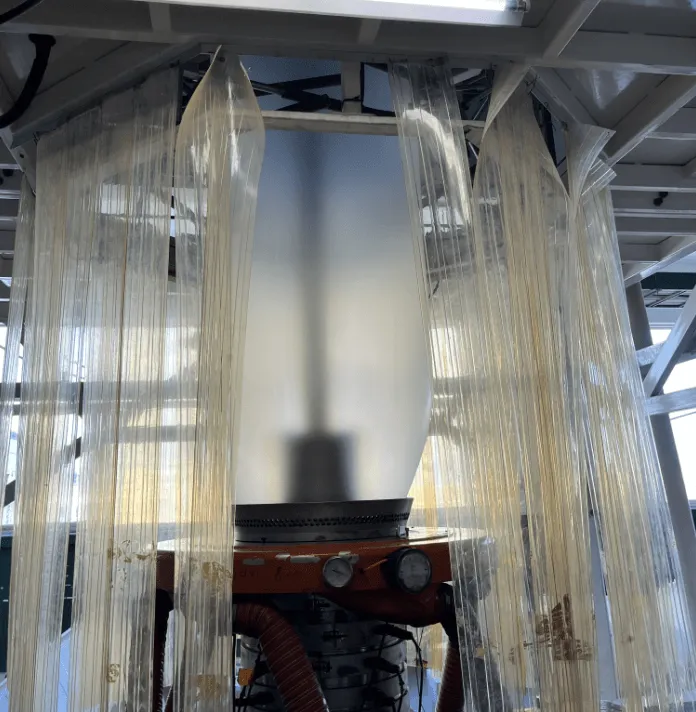
Plastic film blowing machine is a kind of equipment used to produce plastic film, which is widely used in the field of plastic packaging. Its basic working principle is to make plastic raw materials into film by heating and extrusion, and it is mainly used to produce various types of plastic bags, packaging films, etc. The process structure of the film blowing machine is complex and consists of multiple main parts, each of which has its specific function to ensure the final film quality and production efficiency.
The following are the main process structures and components of the plastic film blowing machine:
1. Feeding Hopper
Function: The hopper is used to store plastic particles or powder. It is usually located at the top of the film blowing machine, and the plastic raw materials enter the screw through it for extrusion.
Features: The hopper needs to ensure that the plastic raw materials are dry and free of impurities to avoid affecting subsequent processing.
2. Heater
Function: The heater is used to heat the plastic particles and melt them to a temperature suitable for extrusion. The heater usually consists of multiple heating sections and can accurately control the temperature.
Features: The temperature control system is very important for the entire production process. Controlling the temperature can ensure the quality and fluidity of the film.
3. Screw Extruder
Function: The screw extruder is the core part of the plastic film blowing machine, responsible for melting plastic particles and extruding them through the die to form a film. The screw pushes the plastic material to the heating section by rotating to complete the melting process of the plastic.
Features: The design of the screw is very important. Usually, according to the different types and characteristics of the plastic, the length, diameter, thread shape, etc. of the screw will be adjusted to ensure a better melting effect.
4. Die Head
Function: The die head is a component that evenly extrude the molten plastic into a film. The design of the die head determines the width and thickness of the film.
Features: The aperture and shape of the die head directly affect the quality of the film. Common die heads include round, flat and other types. In order to ensure uniform film thickness, the die head is often designed with an adjustment system.
5. Air Ring
Function: The air flow system (or air ring) is a key part for cooling the plastic film that has just been extruded. Cooling air is blown into the surface of the film to help it quickly cool and solidify after expansion.
Features: The design of the air ring is directly related to the cooling effect. With good cooling effect, the transparency, smoothness and uniformity of the film can also be improved.
6. Bubble Cage / Blow Up Tower
Function: The blowing device is responsible for stretching and inflating the plastic film just extruded to form a tubular film. The film is expanded by the airflow to obtain the required thickness and width.
Features: The stretching process affects the strength and transparency of the film, so the pressure of the airflow, the stretching speed, etc. need to be precisely controlled.
7. Water Cooling Tank
Function: The cooling tank is used to further cool the already inflated film. The length, depth and water flow rate of the water tank all affect the curing effect and quality of the film.
Features: The cooling process is very critical. Uneven cooling may cause unstable film dimensions or defects.
8. Haul-Off Unit
Function: The haul-off unit is used to control the stretching speed of the film, ensure that the film maintains a constant stretch rate after cooling, and maintain a stable production speed.
Features: The traction device usually consists of a drive roller and a guide roller, and the speed needs to match the output of the extruder.
9. Winder
Function: The winder is responsible for winding the produced plastic film into a roll. Depending on the purpose of the film, the winding method and tension need to be finely adjusted.
Features: The design of the winder must ensure that the film will not be damaged during the winding process and can meet the customer's requirements for film quality and specifications.
10. Control System
Function: All operations of the entire film blowing machine need to be regulated and managed by the control system, including temperature control, speed regulation, airflow regulation, etc.
Features: Modern film blowing machines are usually equipped with digital control systems that can accurately adjust the parameters of each link in the production process, thereby improving production efficiency and film quality.
The process structure of the plastic film blowing machine consists of multiple key parts, each of which works together to ensure the quality of the final product. Through precise temperature control, screw design, die head adjustment, airflow cooling and other steps, the film blowing machine can produce plastic films that meet different specifications and quality requirements. The optimization and adjustment of each link directly affects the production efficiency, appearance quality and physical properties of the film.