Introduction
Vacuum packaging plays a critical role in modern food preservation, commercial storage, and industrial packaging. Whether you are packaging fresh meat, seafood, frozen food, vegetables, or prepared meals, choosing the right vacuum bag directly affects sealing performance, shelf life, product appearance, and packaging efficiency.
Among the most commonly used vacuum packaging materials, two major types dominate the market:
Embossed Vacuum Bags
Many buyers, distributors, and food businesses often ask:
What is the difference between smooth vacuum bags and embossed vacuum bags?
The following provides a comprehensive comparison of two types of vacuum bags, covering their structure, working principles, application fields, equipment compatibility, advantages and disadvantages, as well as guidance on how to select the appropriate solution based on your specific packaging requirements.
What Are Smooth Vacuum Bags?
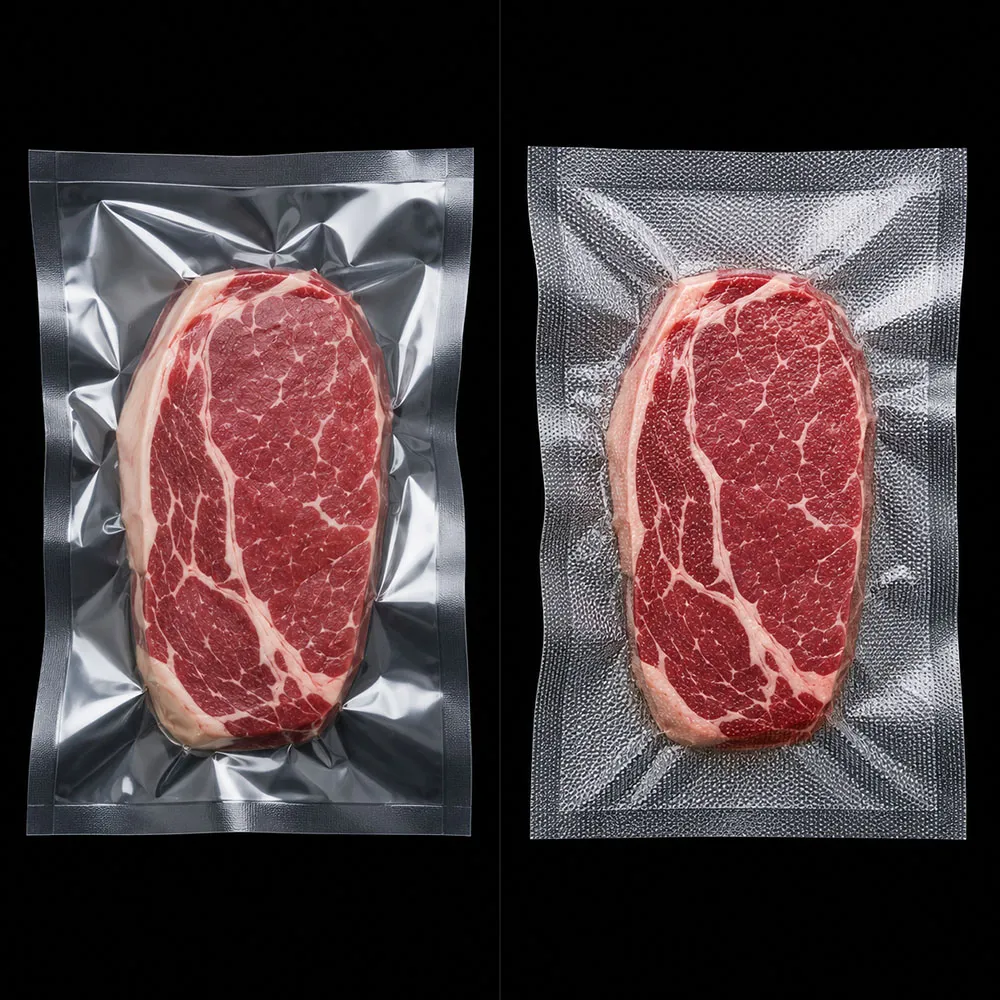
Smooth vacuum bags, also called plain vacuum bags or flat vacuum pouches, feature a completely smooth and transparent surface on both sides.
These bags are usually manufactured using:
PA/PE co-extruded film
Nylon + polyethylene structures
Multilayer food-grade materials
Smooth vacuum bags are mainly designed for:
Chamber vacuum sealers
Commercial vacuum packaging machines
Industrial food packaging systems
Because the bag surface is flat and smooth, the vacuum chamber machine removes air from the entire chamber rather than relying on air channels inside the bag.
What Are Embossed Vacuum Bags?
Embossed vacuum bags, also known as textured vacuum bags or channel vacuum bags, feature a specially embossed surface with raised patterns or textures.
The textured structure creates tiny air channels that allow air to escape efficiently during vacuum sealing.
These bags are primarily designed for:
External vacuum sealers
Household vacuum machines
Food saver vacuum systems
The embossed texture prevents the two film layers from sticking tightly together during air extraction.
Smooth Vacuum Bags vs Embossed Vacuum Bags
1. Surface Structure
Smooth Vacuum Bags
Completely flat and transparent
No texture or embossed pattern
High clarity and glossy appearance
Embossed Vacuum Bags
One or both sides textured
Dot pattern, diamond pattern, or air-channel texture
Slightly reduced transparency due to embossing
2. Vacuum Sealing Principle
Smooth Vacuum Bags
Smooth bags rely on chamber vacuum machines.
The machine removes air from the entire vacuum chamber, making internal air channels unnecessary.
Embossed Vacuum Bags
Embossed bags create air flow channels between film layers.
This allows external vacuum sealers to remove air effectively.

Machine Compatibility
| Vacuum Bag Type | Compatible Machine |
|---|---|
| Smooth Vacuum Bags | Chamber Vacuum Sealers |
| Embossed Vacuum Bags | External Vacuum Sealers |
| Embossed Vacuum Bags | Chamber Vacuum Sealers |
| Smooth Vacuum Bags | Usually NOT suitable for external sealers |
Advantages of Smooth Vacuum Bags
Excellent Transparency
Smooth vacuum bags offer crystal-clear visibility, making products look cleaner and more attractive.
This is especially important for:
Fresh meat
Seafood
Cheese
Ready meals
Lower Material Cost
Smooth bags are generally more economical to manufacture because they do not require embossing rollers or texture processing.
Stronger Seal Integrity
Their flat structure often provides:
Better sealing consistency
Higher puncture resistance
Improved oxygen barrier performance
Ideal for Commercial Packaging
Widely used in:
Food factories
Commercial kitchens
Meat processing plants
Industrial packaging lines
Advantages of Embossed Vacuum Bags
Excellent Air Removal
The embossed texture creates air channels that improve vacuum efficiency.
Compatible with Household Vacuum Sealers
Most home-use external vacuum sealers require embossed bags to function properly.
Better Vacuum Performance for Home Users
Textured bags help avoid:
Air pockets
Incomplete vacuum sealing
Seal failures
Easy to Use
Suitable for:
Small businesses
Home food storage
Sous vide cooking
Frozen food packaging
Common Applications of Smooth Vacuum Bags
Smooth vacuum bags are widely used for:
Commercial meat packaging
Seafood processing
Frozen food storage
Cheese packaging
Medical packaging
Industrial vacuum packaging
Common Applications of Embossed Vacuum Bags
Embossed vacuum bags are ideal for:
Home food storage
Sous vide cooking
Household vacuum sealing
Retail food packaging
Small restaurant operations
Fresh produce storage
Material Structure of Vacuum Bags
Both smooth and embossed vacuum bags are commonly produced using:
PA/PE Structure
Features:
Strong oxygen barrier
Excellent puncture resistance
Good sealing performance
Food-grade safety
Nylon + PE Co-Extrusion
Benefits include:
Moisture resistance
Durability
Flexibility
Freezer compatibility
Which Vacuum Bag Is Better?
The answer depends on your vacuum sealing equipment and packaging application.
Choose Smooth Vacuum Bags If:
You use a chamber vacuum sealer
You need high transparency
You require commercial-grade packaging
You want lower packaging costs
Choose Embossed Vacuum Bags If:
You use an external vacuum sealer
You package food at home
You need efficient air extraction
You use FoodSaver-type machines
Can Chamber Vacuum Machines Use Embossed Bags?
Yes.
Chamber vacuum machines can use both:
Smooth vacuum bags
Embossed vacuum bags
However, embossed bags are usually more expensive, so many commercial users prefer smooth bags for cost efficiency.
Can External Vacuum Sealers Use Smooth Bags?
In most cases, no.
Because smooth bags lack air channels, external vacuum sealers often cannot remove air effectively.
This may lead to:
Poor vacuum effect
Incomplete sealing
Trapped air inside the bag
Custom Vacuum Bag Solutions
Professional vacuum bag manufacturers typically provide:
Custom sizes
Custom thickness
Roll or pouch formats
BPA-free materials
Printed logos
Food-grade certifications
Recyclable or eco-friendly options
Popular customization choices include:
3-side seal bags
Vacuum bag rolls
Embossed channel rolls
Heavy-duty puncture-resistant bags
Future Trends in Vacuum Packaging
The vacuum packaging industry continues to evolve toward:
Sustainable Materials
Growing demand for:
Recyclable vacuum bags
Biodegradable packaging
Reduced-plastic solutions
High-Barrier Packaging
Advanced multilayer structures improve:
Freshness retention
Shelf life
Oxygen protection
Smart Food Packaging
Future packaging may integrate:
QR codes
Traceability systems
Freshness indicators
Conclusion
Smooth vacuum bags and embossed vacuum bags each serve different vacuum sealing systems and packaging applications.
In simple terms:
Smooth vacuum bags are best for chamber vacuum machines and commercial packaging.
Embossed vacuum bags are ideal for external vacuum sealers and home food storage.
Understanding the differences between these two vacuum bag types helps businesses and consumers choose the right packaging solution for maximum freshness, efficiency, and cost performance.
If you are looking for high-quality custom vacuum packaging bags, working with an experienced manufacturer can help you achieve better packaging performance, stronger brand presentation, and reliable food protection.
FAQ
Are embossed vacuum bags reusable?
Some heavy-duty embossed vacuum bags can be washed and reused if properly cleaned.
Are smooth vacuum bags food safe?
Yes. Most smooth vacuum bags are manufactured using food-grade PA/PE materials and comply with FDA or EU food-contact standards.
Which vacuum bag has better clarity?
Smooth vacuum bags generally offer better transparency and product display.
Are embossed vacuum bags more expensive?
Yes. Due to the embossing process, textured vacuum bags usually cost more than smooth vacuum bags.